
I had a 2026 plan to stick to the monthly newsletter and to provide timely, helpful advice and content. I failed. ‘Write Feb Newsletter’ has been on my to do list for 6 months now. Maybe it’ll get ticked off in 2027!
Why? Well life. I’m training for a half-ironman, I have a 9-year-old with dance, drama, gymnastics or swimming after school every day, the Be Braver Podcast is in season 3, my clinic has been incredibly busy with athletes and high performers wanting support with performance anxiety or their ADHD, ASD or AuDHD and I’m doing lots of speeches and workshops. Exactly the life I dreamed of when I quit corporate world – so zero complaint – I’m incredibly lucky and it is all awesome. But stuff falls by the wayside.
The performance journey
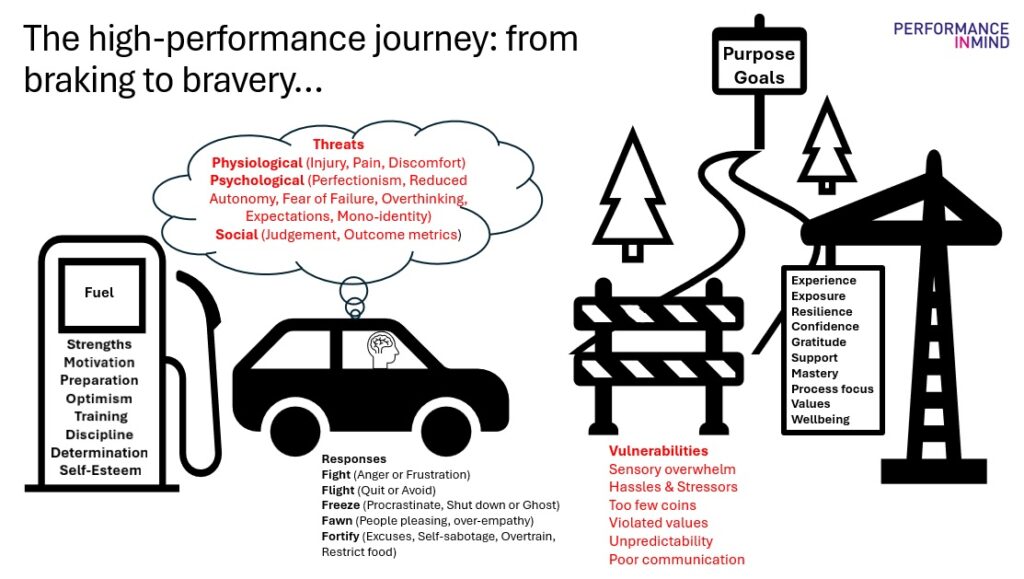
One of the schools I work with; Millfield – https://www.millfieldschool.com/ asked me to describe my philosophy. As anyone who has done professional level training would know; so often in the assessment process you are asked to describe your philosophy and many of us struggle, coming up with something fluffy and ‘integrative’ to cover all bases. I decided a sentence was too hard so drew mine. We start with the ‘fuel’ going into a vehicle, the triggers that might put the brakes on, the bumps and barriers that might show up on the journey but highlight all the skills, strengths and tools we can use to knock those barriers down and still make it to achieve our values and goals.
Does it resonate?
ADHD athlete support
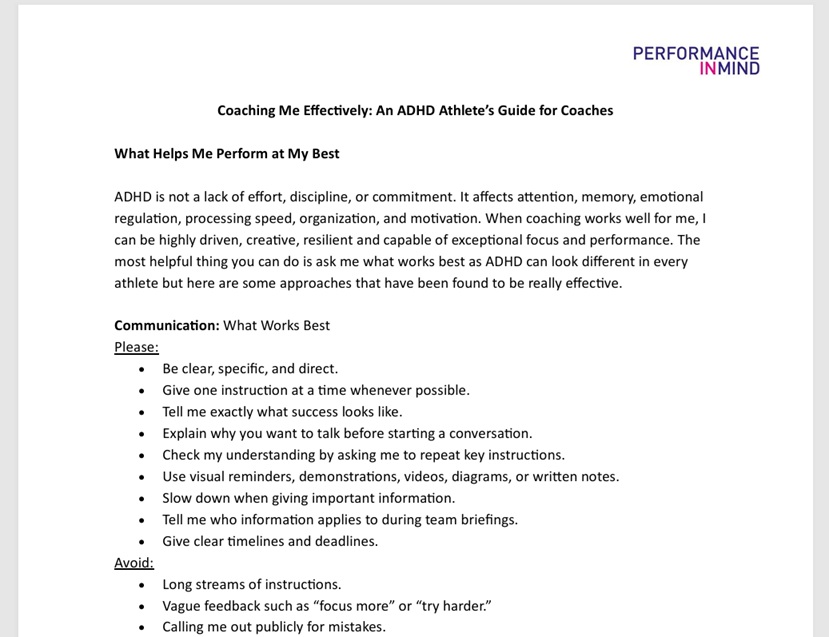
I spend a lot of time in clinic (with athletes) and workshops (with coaches) working on building understanding; how might this trait impact this relationship? To speed up the process I’ve written a handout that athletes can give to their coaches to suggest ways to engage and communication with them most effectively. If you are an athlete with ADHD or a coach with athletes who have ADHD you can download a copy here: How-to-coach-my-ADHD-Athlete-sheet-1.pdf.
Sensory overwhelm sheet
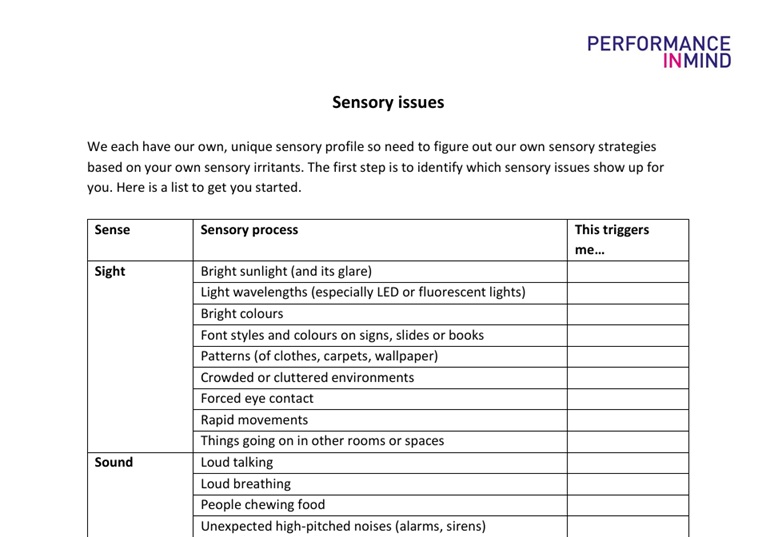
Another area that we discuss a lot in clinic and workshops is sensory overwhelm. If you are neurodivergent you are most likely to struggle when there are too many sensory triggers around. I’ve created a sheet to help you consider which ones might be most triggering to you so that you plan around them. The sheet can be downloaded here (Sensory-stressor-list-1.pdf). I’m hoping to make some sport specific sheets too so if you have any sensory issues from your specific sport I’d love to hear them: josie@performanceinmind.co.uk
How do we get important psychological concepts and raise awareness
Finally, I had a really interesting conversation with George Mycock, founder of MyoMinds and Paula Watson, Exercise Psychologist – Made Up to Move at Elevate (big fitness expo we spoke at last week) about how we get big psychological tools and concepts out to those who don’t know they need to look for them. If you are told exercising is good for you (it is) and more is better (not always) then you might never hear about exercise addiction. If you are 100% focused on getting bigger muscles you’d never think to tune into something on muscle dysphoria. You’d have to be interested in the subject to watch it.
If we want to get the right health information out to the people who need it then George’s research found it is often through podcasts. But who, if they don’t realise they have slice dysphoria or haven’t yet acknowledged their eating habits have become disordered and dangerous, is going to listen to a podcast on the subject? The best way to get information to those who need it, but don’t yet know they need it, is through TV shows and podcasts that are much more around general entertainment, but happen to feature a character who struggles with an issue or a guest (often celebrity) who mentions how they have dealt with that type of issue.
We considered Eastenders who have covered trauma (and the EMDR approach) and self-harm and the therapy used in the last couple of years. Really important issues to cover but very quickly lost from the scripts and they miss the enduring elements of some of these issues where in reality there are setbacks and relapses.
It is the podcasts that are easy to listen to, with celebrities we are interested to hear from, that are set up as entertainment but surreptitiously along the way switch on understanding of new subjects. Parenting Hell does this really well with comedians and celebs chatting about life as comedians and parents but sliding in their thoughts and experiences of anxiety, depression, parenting tools and IVF. Jamie Lang on the Great Company podcast also does this brilliantly; imagine hearing Professor Green talking about his Autism, tics and childhood bedwetting and Jamie chipping in about his ADHD Diagnosis. You can watch a clip here: https://fb.watch/HTO5S7iUto/ It is a much more powerful way to normalise neurodiversity than reading a book on it (though of course my book is available for anyone who prefers reading!)
Off to train
Will aim to be back in July – though the half Ironman I’ve been training for is on the 26th so who knows!
Josie
Recent Comments