
As a coach you may not have a huge amount of control over the wellbeing aspects for many of the athletes you work with but it is while they refuel, rest, recover and sleep that their strength and skills will develop so awareness of how some ADHD symptoms can make it harder to put wellbeing approaches into practice can be helpful. By being aware of the impact of ADHD on wellbeing you can have a really positive impact and consider how your sessions, training plans and competition schedules might work, or not, for any athletes with ADHD.
In this lesson we will look at:
- Day to day nutrition and hydration
- Disordered eating
- Sleep issues
- Stress management
- Injuries
- Brain fog
- Concussion
- Medication side effects
Day to day Nutrition and Hydration
Our brains are about 3-5% of our body weight but they suck up about 20% of the fuel we put into our body – in particular they love glucose. When they are underfuelled the threat system is much more explosive and we stop thinking with the rational, logical decision making part of our brain and instead think more dramatically, using lots of black and white emotionally driven thinking. This can often get us into difficulties as we either switch off and lose focus or we get red mist when someone annoys us and we react irrationally because now we have reduced emotional regulation. This means maintaining good nutrition and fuelling our sport well becomes incredibly important.
However, nutrition is tricky with ADHD because:
- ADHD medication can reduce appetite
- Weight or aesthetic based sports like those that maintain a ‘lighter is faster’ culture (running, cycling, climbing), requires the athlete to be ‘aesthetically pleasing’ (gymnastics, trampolining, diving) or has weight classes (rowing, judo, boxing) can negatively impact nutrition goals.
- An athlete may feel hungry but lack the motivation to get up and make something to eat.
- The texture, smell, shape of some food feels uncomfortable.
- Night owls (up to 80% of those with ADHD) will struggle to eat early in the day when their brain and body would prefer them to still be asleep.
- If an athlete gets distracted or hyperfocused on a task they can forget to eat.
- If they have forgotten to eat in the day (hyperfocus or medication reducing appetite) they may binge when they notice huger at night.
- If they get distracted they eat slowly which becomes frustrating for others.
- Aversive consequences of eating like regular stomach upsets (often caused by the anxiety that might sit alongside ADHD) or a fear of chocking can make food feel like a threat.
- They may hyper focusing on food needing to be prepared a certain way.
- They may require a specific routine when it comes to food (i.e. the same thing every day).
- Hyper focusing on trends or diets which can limiting the variety or regularity of food.
To help your athletes develop a good relationship around food:
- Increase emotional literacy around food: ‘I feel fat’ is usually a sign that someone has low self-esteem and may need support. Fat is not a feeling so perhaps question what word they actually mean instead of fat.
- Suggest easy options for food: Better they eat something imperfect than not eat at all.
- Incorporate food into daily plans: If there will be key sessions that need specific fuelling then add that fuelling onto the training plan.
- Suggest the athlete front loads food: They can do this so the lack of appetite from meds doesn’t limit energy availability too much.
- Suggest calorie rich drinks to fuel their activity without actively having to remember to eat.
- Suggest they create a competition nutrition plan – Just like the example training and nutrition plan (above) try to incorporate nutrition and hydration into your competition plan too.
Hydration
ADHD symptoms can make an athlete less likely to stay hydrated (they either don’t tune into their thirst signals, ignore them if they are in the zone or forget to regularly drink if in sporting environments) and the symptoms of dehydration can make ADHD symptoms worse.
Dehydration can impact executive functioning, attention and memory, all issues they may already struggle with if they have ADHD. Physically, stimulant medications can also lead to dehydration as, in the process of increasing the amount of Dopamine in the brain, they also activate the sympathetic nervous system and the side effects of this are increased heart rate, overheating and dry mouth. Mentally dehydration can show up as worsening brain fog, difficulties in concentrating, forgetfulness, slower than usual processing times and you may also be clumsier. All limiting factors in high performance sport.
The base line of hydration should be around two litres of liquid a day but add on more if your athlete:
- Is doing lots of exercise that day
- Is training in a hot environment
- Seems to be fighting off any illness
- Has had any alcohol in the last 24 hours
If your athletes meet any of these criteria then reminders to drink more can be helpful.
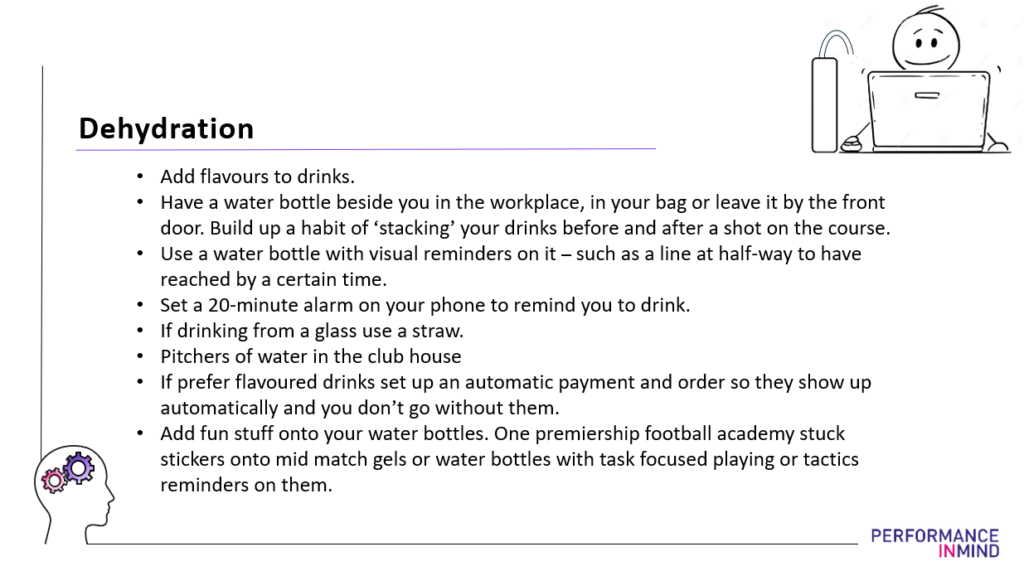
Some ways you can suggest your athlete ups their hydration…
Disordered eating
Alongside the disordered eating that can come with ADHD there are also specific eating disorders that have been found to be more common in those with ADHD. A study in the USA found that adults with ADHD are nearly three times more likely to have been diagnosed with an eating disorder at some point in their life than non-ADHD adults. Eating disorders are also more common in athletes; in studies used by UK Sport in their guidance on Eating Disorders in Sport it was found that about 13.5% of all athletes have some kind of eating disorder and in sports like distance running that was higher at 16%. This means when we put ADHD and sport together we need to be particularly careful.
The four eating disorders you are most likely to see in athletes are: RED-S (Relative Energy Deficiency in Sport), Anorexia, Bulimia and Binge Eating Disorder.
Binge Eating Disorder – Recurrent binge eating episodes where they consume large quantities of food in a short amount of time and feel they can’t stop. With ADHD this can occur because they have become incredibly hungry without noticing; either due to stimulant medication reducing appetite during the day or being hyperfocused and forgetting to eat. To fill this hunger they might eat far more than they needed in a way that can feel frantic. They know this is not a healthy way to be and may hide some of the binging but feel unable to stop.
Anorexia – A goal of keeping their weight as low as possible. There won’t be a figure in mind, they always just always want to weigh less. The athlete may well feel they are actually overweight (unable to see their body as others might), have a real fear of gaining weight, weigh themselves obsessively, restrict food, weigh food, lie about what they are eating and obsessively focus on following the anorexic voice within their brain. Anorexia is a really serious illness and it is incredibly important to get help as early as possible.
RED-S – RED-S stands for Relative Energy Deficiency in Sport where the athlete does not have enough energy to fuel all the exercise they are doing. The nutrition they take in is not enough to cover the energy needed by their body (to fuel day to day demands) and by their sport. It can sometimes come because the athlete is trying to reduce their weight to improve performance but can also be because they haven’t realised how much more food they need to eat to fuel all the exercise they are doing.
Bulimia – Binging (eating much more food than we need) and purging (make themselves vomit, taking laxatives or over exercising) it to stop ourselves gaining weight. Many people with bulimia will not actually lose weight as the calories will be absorbed into the body before they throw up. Athletes who over-exercise as their approach to purging will struggle because they will be very fatigued, over trained, and much more susceptible to injury.
As a coach it is essential you are able to spot the triggers of disordered eating
- Does the athlete have a personality type (anxious, sensitive, perfectionistic, kind) which might mean you are more susceptible to disordered eating behaviours?
- Do you coach in a sport where weight or body shape and size are discussed?
- Does the athlete seem to care a lot what other people think about them?
- Do they set really high goals for themself and expect to achieve them?
If you answer yes to a number of these then keeping an eye on their fuelling patterns using the ABCDE tool:
- Absence – Are they avoiding any food related activities, being secretive around food, lying about what has been eaten, hiding food or missing social occasions or activities which involve eating?
- Body – Do they seem weak, have lost muscle strength and get dizzy and cold? Is hair falling out of their head but growing on their arms and legs?
- Control – Feeling that you need to extensively control what you eat and when. It may feel like you have a voice in your head directing you to follow controlling behaviours; restricting, purging or binging and making you develop ‘food rules’ that you cannot break. Are you spending more time than normal exercising or doing exercises which won’t help you get better at your sport, but help you feel like you are ‘burning calories’?
- Diet – Changing your diet, cutting out whole food groups (meat, dairy products, carbs, gluten, sugar), counting calories, not eating anything seen to be fattening and having lots of rules around food would all be red flags to look out for.
- Emotions – When you have an eating disorder it becomes very hard to concentrate and think clearly and your mood will drop significantly as eating disorder moods mirror depression.
If you spot any of these signs it is really important to talk to the athlete to help them reach out to their GP or medical clinician for support.
Sleep issues – how to help pre–competition or on camps or tours
ADHD and sleep is an interesting area as some athletes with it really struggle to sleep, others find they drop off within seconds and are constantly craving more. Both can cause problems for wellbeing as when we live out of sync with normal sleep patterns we can get a form of jet lag and become unable to perform at our best.
It is estimated that 70% to 80% of adults with ADHD have one or more sleep problems and this is an issue because ADHD and sleep problems can exacerbate each other. An analysis of 16 studies found children with ADHD were more likely to have difficulty with sleep initiation (i.e. trouble falling asleep) fragmented sleep, poor sleep efficiency, sleep disordered breathing and excessive daytime sleepiness. Poor or inadequate sleep can prompt behavioural and learning difficulties in the daytime and exacerbates inattention, distractibility, and irritability.
The biggest sleep issue that tends to arise with ADHD is social jetlag and the resulting sleep debt:
Sleep debt = sleepiness, less focus, lower cognitive functioning, impaired memory function, irritable, low mood and increased risk of binge eating
Encouraging sleep, asking athletes to prioritise sleep and being able to talk about modifications to training on days it is poor is important.
Stress management
Living with a neurodiverse brain in a world designed for the neurotypical is going to see an athlete dealing with additional stressors. On top of the stressors that everyone has to deal with in modern life, they also have to deal with the stressors that come from ADHD symptoms and the stressors that sport can give us.
Common unhelpful coping mechanisms:
- Avoidance
- Emotional ranting
- Drinking
- Hyperfocus
- Going very quiet and withdrawing.
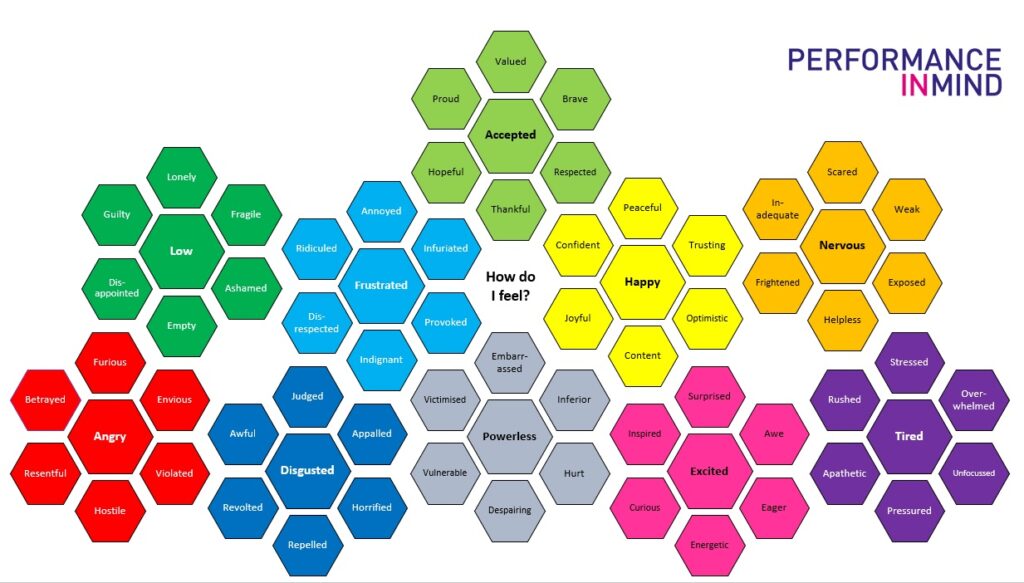
The most helpful coping mechanisms are those that are specific to the issue and the athlete. A tool you can use to help them here is to understand all the stressors they are dealing with.
This handout can be used to help the athlete identify the stressors. You can then address any sporting specific ones with them.
Injuries
Injuries in athletes with ADHD are thought to be more common. A study in Japan found that adults with ADHD visited the emergency room 10 times more than non-ADHD adults and were hospitalised three times more than non-ADHD adults. A further study in Denmark found that those with ADHD had a lower life expectancy and double the risk of death compared with non-ADHD adults. Other studies find those with ADHD may drive cars more recklessly, have a higher incidence of traffic citations and more car accidents.
Improvements in attention, impulsivity, and risk-taking behaviours that can come from ADHD medication could explain why those using medication have a lower risk of injuries, as they are less likely to be putting themselves in as many risky situations.
For those who do get injured the issue is that the injuries can stop them exercising for a while which doesn’t just take away their coping mechanism for dealing with any hyperactivity but it also removes lots of the structures they have in place for handling day to day difficulties and depend upon. This can make ADHD symptoms get, and feel, worse.
It means you may want a slightly higher risk threshold for potential injury or over training with athletes with ADHD.
Brain fog
To help medics support athletes who receive a concussion in their sport many student athletes in the USA have pre-season cognitive testing. An element of this is to report if they have any concussion-like symptoms (headache, dizziness, difficulty concentrating, and ‘fogginess) at the start of the season to set a baseline so that if they do sustain a concussion they can be re-tested and results can be compared to their baseline performance. When this was run as a large study of over 39,000 college athletes they found that those with ADHD reported more concussion like symptoms in their baseline testing than those without it suggesting that, day to day, athletes with ADHD are experiencing higher levels of headache, dizziness, difficulty concentrating, and ‘fogginess.’
Concussion
As we just saw, ADHD symptoms can overlap with concussion symptoms but there is also emerging research that having ADHD can make concussion symptoms worse. This is an issue in sports where the athlete with ADHD is already at higher risk of injury and may assume the concussion symptoms are related to their ADHD not the injury and return to play without having fully recovered.
A 2023 study found:
- ADHD was associated with 1.2 times greater risk of a concussion.
- Those using medication were at 1.5 times greater risk of a concussion.
- Those with ADHD had more severe concussion symptoms, took longer to recover (on average three days longer) and had worsened ADHD symptoms after concussions.
So, it is vital as a coach to take this into account if any of your athletes suffer from a concussion and to share their diagnosis with the clinician who treats them so more recovery time can be factored in.
Medication side effects
Around 60% of those with an ADHD diagnosis take medication. There are two types of medication; stimulants and non-stimulants. The most popular by far are stimulants and they have been found to be an effective treatment to improve executive functions in many of those with ADHD. You can learn all about medication for ADHD and the main side effects to look out for as a coach (underfuelling, overheating and heart issues) in Lesson 9.

Recent Comments