
Athletes diagnosed with ADHD need to make a choice as to whether or not they would like to take medication. If you are coaching them and maybe travelling away to competitions it is essential that you know if they are on medication. This is for the health, wellbeing and safeguarding (as their medication is often a controlled drug).
62 per cent of children in the UK with an ADHD diagnosis in 2020 were receiving medication (British Journal of Psychology). When tested in school aged children it was found to be effective in between 65-75% of cases and for these people their symptoms around executive functioning have been found to improve by up to 90%.
There are two types of medication; stimulants and non-stimulants. The most popular by far are stimulants – studies find that over 50% of individuals with ADHD are prescribed one.
Why they might work…
It might seem counter intuitive to give those with hyperactive ADHD stimulant medication – surely they are already over-stimulated? The Dopamine hypothesis explains why they are thought to work.
The Dopamine hypothesis
People with ADHD may have slight differences in their brain’s structure, the way different brain regions engage to perform actions and the way neurotransmitters pass on information. Of the neurotransmitters (the chemicals that send signals in the brain) Dopamine is a really important one for a number of reasons:
- It helps us use our motor skills and cognitive abilities
- It plays an important role in our reward and motivation system
- It spikes when we anticipate something good or significant happening
- It can impact our memory and regulate attention
Stimulant medication can increase Dopamine and norepinephrine (another important neurotransmitter) levels in the pre-frontal cortex (the part of our brain that drives our cognitive and executive functions).
Some medications have an ‘immediate-release’ version which acts quickly, lasting for 2-5 hours and wears off rapidly. These might be needed to be taken a few times a day. Others are extended-release so they are taken in the morning and are released into the body over the day, lasting between 6-14 hours.
The optimal stimulant dose will vary but medical professionals will usually have a ‘start low, go slow’ approach, where the stimulant can be gradually increased until they find the most effective dose for the athlete.
“It makes me feel like I have more space in my brain. I have calm and things are not as tightly woven. They have a bit more space to percolate. And that seems to feed into my nervous system. And have a very calming effect. It just kind of, just takes the edge off the extremes so I feel better able to deal with stuff. A calm focus rather than the sort of intense crazed focus.” Jen, Runner
Stimulants tend to be the first approach a psychiatrist would take. However up to around 30% of those with ADHD either do not have a beneficial response to stimulant medication or find they are unable to tolerate the side effects and these people may take non-stimulant medication which tends to focus on drugs which stop the brain reuptaking certain neurotransmitters (like Norephedrine) or act as anti-depressants.
Taking medication is a very personal choice and so in deciding whether to take it, in particular as an athlete, there are a number of elements to consider.
Benefits of medication for general functioning
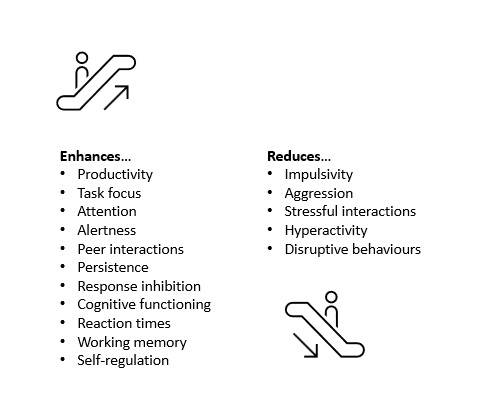
The benefits of stimulant medication in day-to-day life for those with ADHD can be found in both behavioural and cognitive areas.
Benefits specifically for athletes
Putting these benefits into the sporting environment we can see how it may be help an athlete with ADHD to take medication.
Overall, it is suggested that, in taking stimulant medication, a balancing takes place where the athlete’s cognitive and behavioural activities become closer to the abilities of a non-ADHD athlete. A large meta-analysis (a study pulling together lots of other studies) says that the benefits of the medication can be that it improves cognitive functioning including memory, reaction time, reaction time variability, and response inhibition, all of which can get an ADHD athlete closer to the level of cognitive function of someone without it.
Behaviourally though is where, for some, we can see a big difference. ADHD athletes on stimulant medication have been found to improve their sportsmanship and peer relationships and have fewer rule violations and to cause less disruption during practice. It has also been found to improve effort levels and sporting knowledge in juniors, perhaps because they are able to focus and absorb more of the sporting information. If an athlete receives fewer yellow and red cards, and they don’t develop an unhelpful and negative reputation which can squash their self-esteem, then they will do better long term in their sport.
When looking at the impact on skills, the research suggests that the medication doesn’t improve gross motor skills (skills using the whole body and large movement) – but enhances conditions for better performance so if you have the skills you are less likely to mess them up by losing your temper or patience, being impulsive, getting sent off for poor behaviour or not following instructions. Some studies have found stimulant medication does improve fine motor skills (skills requiring co-ordination to do activities with our hands) and visual motor speed (how quickly we can integrate the information in front of us to take action) in sport.
Injury is a huge cause of upset and distress and the improvements in attention, impulsivity, and risk-taking behaviours that can come from ADHD medication could explain why those using medication have a lower risk of injuries, as they are less likely to be putting themselves in as many risky situations.
“Since I had the diagnosis I’m really learning to embrace who I am I and be less bothered that I don’t fit in in as many places as others. The medication has really helped my energy levels throughout the day, so I don‘t find things as tiring, and that has helped my mental health hugely.” Isla, Cyclist
Risks of stimulant medication in daily life
The common adverse side effects of stimulant medication (most were found the be moderate and short lasting):
- Neurological effects (headache, dizziness, insomnia, seizures, tics, irritability, agitation)
- Gastro issues (nausea, constipation, abdominal pain, loss of appetite, dry mouth, excessive thirst)
- Cardiovascular issues (increase in heart rate, Jitteriness, palpitations, body temperature)
- Gynaecological issues (menstrual problems, reduced libido)
- Sleep disturbances (insomnia, fatigue)
Specific side effects to be aware as a coach…
Some of the adverse side effects can be amplified when someone with ADHD is playing sport and most sport governing bodies state that athletes with ADHD approved to use stimulant medication should be monitored by health care professionals and regularly physically evaluated. Three of these adverse side effects can have specific negative impacts on athletes health, wellbeing and performance; the loss of appetite, the rise in body temperature and risks for those with cardiovascular issues.
Underfuelling
ADHD stimulant medication is an appetite suppressant and many athletes on it report finding it very difficult to eat as much as they need to. Research has found those taking the most common stimulant for ADHD (methylphenidate) were around 15 times more likely to have a decreased appetite than those not taking it.
In one study on an ADHD stimulant medication, 91% of those taking it lost weight and the average weight loss was 3.6kg. This can show up as reduced growth rates in children. Studies that use longitudinal data suggest that children using stimulant medication generally have a reduction in both height and weight gain of, on average, a reduction in height of approximately 1cm a year during the first one to three years of treatment and a reduction in weight gain of 3kg lower than predicted over a three year period.
As well as possibly unwanted weight loss and growth limitations underfuelling has implications for sporting performance too. At a basic level athletes need energy to physically perform the movements required. At a psychological level we now our brains need lots of fuel; mainly glucose. When an athlete is underfuelled they struggle to make good decisions, can think irrationally and their threat system triggers very easily causing emotional dysregulation (often known in sport as ‘the red mist’).
Overheating
Studies have found that many stimulants that are used to treat ADHD symptoms can increase the body’s core temperature. This can cause the athlete to overheat in hot environments and increase risk of heart injury, mask signs and symptoms of fatigue and cause collapse. This suggests that athletes training or competing in hot environments and pushing themselves really hard will need to consider use of stimulants and if they do take them be very mindful of the potential risks.
Pressure of medication on the heart
A number of studies have found that stimulant medication can cause an elevation in blood pressure. Additionally, both stimulant and non-stimulant medications have been found to cause a small increase in heart rate averaging 1–4.8 beats per minute (at both rest and active) but the way data is averaged in trials may hide some much larger increases; in rare cases it has been found to rise by up to 50 beats a minute. This increase may be significant for those with an underlying heart condition. No risk has been found between the use of stimulant medication and cardic events in those without underlying cardiac conditions, but there is thought to be an increased risk of complications when an athlete already has a cardiac condition. The rise in rest and exercising heart rate may also have implications for the RPE (rate of perceived exertion) making an athlete’s effort level feel harder.
Mitigating the risks:
Pre-prescription heart check: A number of sporting bodies state that an athlete must have a cardiac check before being prescribed stimulants to protect from this risk. They will often run a syncope on exercise and discuss any family history of sudden death below the age of 40 years or death associated with exercise, ask about pre-existing arrhythmias and channelopathies and any elevated blood pressure before ADHD stimulant medication could be offered.
Timing of food and medication: If a stimulant does cause appetite suppression it can be helpful to have a big breakfast before taking the medication, have lots of easy to access healthy snacks within grabbing distance and then plan for a big dinner so that it matters less if they don’t eat so much at lunch. To do this, talk to your athlete about what snacks they can eat if they don’t feel hungry and have lots of those stored at training venues.
Heat awareness: Being incredibly mindful of the higher body temperature than ADHD medication can cause so having plans in place to manage the heat in competitions or hard training taking place in warmer climates.
Monitoring: Monitor height, weight, appetite, heart, blood pressure and common symptoms such as headache, insomnia, anorexia, nausea and emotional upsets. WADA requirements say this type of monitoring should take place at least every 12 months and the athlete should be reevaluated for ADHD every 4 years.
Medication holidays: If growth is found to become limited or the medication is harming some element of performance then some athletes take a medication holiday. This is where they stop taking the medication for anything from a few days to a few months. Some will take medication specifically on certain days when they have tests or competitions. Some might take them regularly as they find they help with studying and training but stop ahead of a big match or event where they want to have the impulsiveness and additional energy.
The ethics of medication in sport
Athletes taking stimulant medication need a Therapeutic Use Exemption (TUE) as the medication is on the WADA banned list. Here are the latest WADA Guidelines: WADA publishes final versions of 2027 World Anti-Doping Code in English and French | World Anti Doping Agency
Guidelines will change regularly though so make sure you check the latest WADA guidelines and those specifically from your sporting governing body.

Recent Comments